Mobile Homes That Need New Water Lines
Manufactured homes have their own plumbing quirks. These are the homes that usually need a manufactured home repipe.
- Homes with gray poly lines: Many manufactured homes from the late 1970s to the mid 1990s used gray polybutylene. It can crack at the fittings without warning, which makes it the most common reason owners call.
- Homes with repeat leaks: A leak under the floor soaks the insulation and belly board. If leaks keep appearing in new spots, the lines are likely worn throughout and patching will not keep up.
- Homes with low pressure: Narrow or scaled lines can choke flow to the kitchen and bathroom. New PEX restores steady pressure and makes the home much more comfortable to live in.
- Homes being sold or moved: Buyers and parks often ask about plumbing. New lines remove a common concern and make the sale or move easier.
Single Wide and Double Wide Repipes Compared
Both home types follow the same basic approach, but size and layout change the job a little.
| Feature | Single Wide | Double Wide Repipe |
|---|---|---|
| Layout | One section, one main run | Two sections joined at a marriage line |
| Lines under the floor | Shorter runs | Longer runs and a crossover |
| Typical time | Often about a day | Often a little longer |
| Access | Belly access along one section | Belly access on both sections |
| Key detail | Simple routing | A careful crossover connection |
Manufactured Homes and Hard Water in Hanford
Local conditions affect manufactured homes in specific ways.
Hard Water and Plastic Fittings
Mineral rich groundwater adds stress to old fittings, and poly lines are already prone to cracking there. New PEX with modern fittings handles local water much better.
Summer Heat Under the Home
The space under a manufactured home can get warm in summer. Mobile home PEX repipe work keeps lines supported and away from hot spots, so the new pipe stays in good shape year round.
Cold Snaps and Exposed Lines
Freezes are not common here, but cold nights do happen. Insulation and heat tape where needed protect exposed lines near the skirting and the water inlet.
Polybutylene Lines Under Manufactured Homes
Mobile home polybutylene replacement follows a careful order that protects the home.
The work usually includes these steps:
- Skirting panels removed for access
- Belly board opened along the pipe runs
- Old poly lines cut out or capped
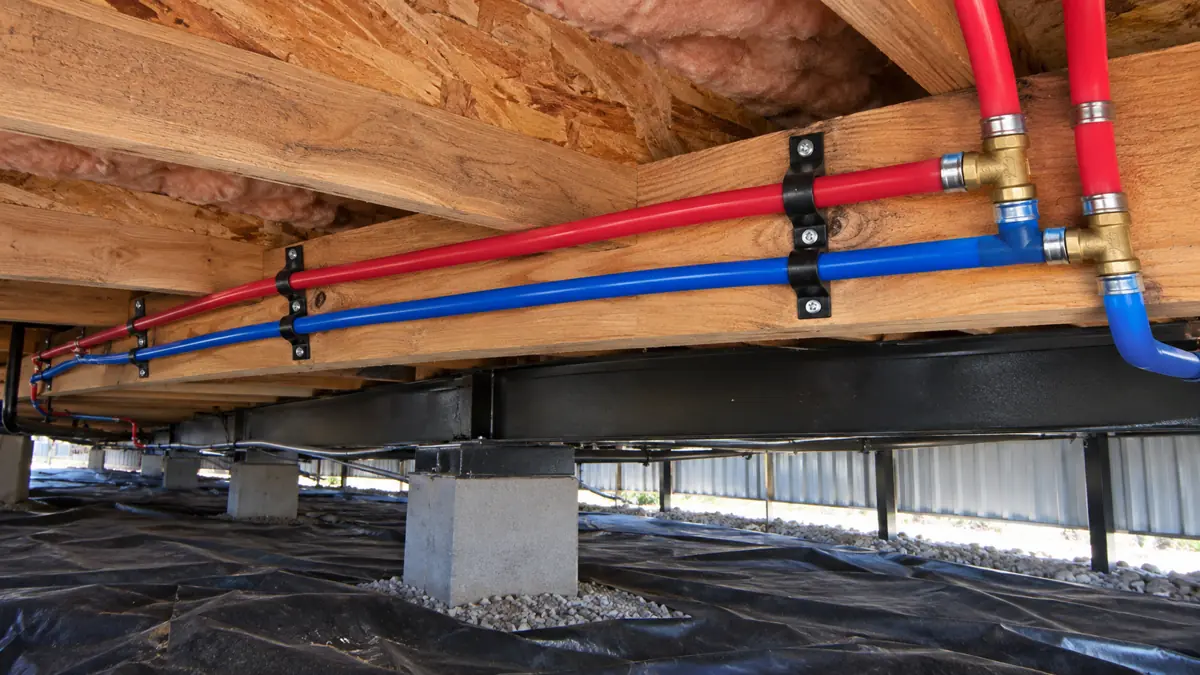
- New PEX run to each fixture
- New shut offs at sinks and toilets
- Insulation replaced around the lines
- Belly board sealed and skirting reinstalled
Work Done From Below, Walls Left Alone
Most of a mobile home repipe happens under the floor, so the inside of the home stays almost untouched. That keeps cleanup simple and the job short.
Why Below the Floor Works
- Supply lines run under the floor
- Fixtures connect through small floor openings
- Interior walls stay closed in most homes
- Furniture rarely needs to move
- Less dust inside the home
- Quicker finish than a site built repipe
- Easy access for future checks
Park Rules and Notices Handled for You
Many manufactured homes sit in parks with their own rules. A smooth job respects them.
- Notice to park management: Many parks want advance notice of plumbing work. Letting management know ahead of time keeps the job on good terms with the park.
- Water shut off timing: Some parks control the water supply to each space. The shut off is planned with the park so neighbors are not affected by your repipe.
- Clean site at the end: Old pipe, packaging and debris are hauled away. The skirting goes back on neatly, so your space looks as good as it did before.
Recent Mobile Home Repipes Nearby
Recent mobile home repiping in Hanford replaced gray poly lines in single wides and double wides across local parks. Several owners called after a sudden leak soaked the insulation under the floor.
Gray Pipes Under Your Home? Ask Us
If you have ever looked under your home and seen gray plastic pipe, it is likely polybutylene. It may be working fine today, but it is known for failing without much warning.
A quick check shows what you have and how it is holding up. You learn whether it is time to replace the lines or whether they can wait a little longer.
Schedule Mobile Home Repiping in Hanford CA This Week
Looking for mobile home repiping near me? Call or send the short form. Our mobile home repiping company will check under your home and prepare a clear mobile home repiping estimate.
Mobile Home Repiping Questions and Answers
Manufactured homes raise a few unique questions. Here are the common ones.
How much does it cost to repipe a mobile home?
Mobile home repiping cost depends on whether it is a single wide or double wide, belly repair needs and access. The mobile home repiping price is listed clearly in a written quote.
Do you need to cut walls in a mobile home?
Rarely. Most lines run under the floor, so the work happens from below through the belly. Interior walls usually stay closed.
Is polybutylene common in mobile homes?
Yes. Many manufactured homes from the late 1970s to the mid 1990s used gray polybutylene supply lines, which is why so many owners now replace them.
Do I need a permit for mobile home plumbing?
Rules differ for manufactured homes and parks, and California HCD oversees many parks. The right permit path is checked for your home before any work begins.
Can you replace the mobile home water line too?
Yes. The mobile home water line from the park connection to the home can be replaced at the same time, which keeps the whole supply new.
Do you repipe double wide homes?
Yes. A double wide repipe includes the crossover between sections. Mobile home repiping in Kings County also covers nearby towns, and a mobile home repiping contractor from our team can confirm timing.