Homes Built With Polybutylene Pipe
Poly B was used in homes for a specific stretch of time. These are the homes most likely to have it.
Homes Built From the Late 1970s to Mid 1990s
Polybutylene was installed in many homes from about 1978 to 1995. About a fifth of local homes were built in the 1980s and 1990s, so plenty of them fall inside that window.
Manufactured Homes From That Era
Many mobile and manufactured homes from the same years used gray poly lines under the floor. These often get replaced from below without opening walls.
Homes With Gray or Blue Plastic Pipe
If you see gray plastic water pipe near the water heater or under a sink, it may be Poly B. Many pipes are stamped PB2110, which makes them easy to identify.
Replace Poly Pipe or Patch the Fittings
Some owners try to replace only the fittings. Here is how that compares with full replacement.
| Feature | Poly Replacement | Fitting Repairs |
|---|---|---|
| Leak risk | Removed with the old pipe | Pipe itself can still crack |
| Insurance questions | Answered with paperwork | Often still raised |
| Home sale | Removes a common concern | Buyers may still ask |
| Cost now | Higher | Lower |
| Lasting fix | Yes | Short term only |
Poly B in 1980s and 1990s Hanford Tracts
Many of the city's newer neighborhoods were built during the Poly B years.
- Large tracts from those decades: Much of the housing in this city dates to the 1980s and 1990s. Not every home used polybutylene, but enough did that it is worth checking before a sale or a big remodel.
- Hard water adds stress: Mineral rich groundwater can wear on old acetal fittings and copper crimp rings over time. Fittings are where Poly B tends to fail first.
- Slab homes hide the lines: In slab homes, poly lines often run through the attic and walls. Leaks can stay hidden until a ceiling stain or wet drywall shows up.
Insurance and Home Sale Concerns With Poly B
Polybutylene draws attention from insurers and buyers. These are the common concerns.
Questions that often come up include:
- Some insurers ask whether a home has Poly B
- Polybutylene pipe insurance coverage may be limited
- Buyers notice it during home inspections
- Lenders sometimes ask about known plumbing risks
- Sellers may need to disclose it
- Leaks can cause sudden water damage
- A permitted repipe answers most of these questions
Clear Pipe ID Before Any Quote
Before any price is given, the pipe gets identified. That way you only replace polybutylene if you truly have it.
How Pipe ID Works
- A look at pipe near the water heater
- A check under sinks and at the toilet
- Reading the PB2110 stamp if present
- Checking the fitting type
- A look in the attic where lines run
- Notes on any past leaks or repairs
- A clear polybutylene pipe replacement estimate afterward
Paperwork Ready for Insurers and Buyers
A finished repipe should leave you with proof. Here is what you keep afterward.
- Permit and inspection record: The city permit and signed inspection show the work was done to code. Insurers and buyers often ask for exactly this kind of record.
- Invoice naming the new material: Your invoice lists the PEX or copper installed and the areas covered. That makes it easy to answer questions years from now.
- Before and after photos: Photos of the old Poly B and the new lines give a simple visual record. They are useful when talking to an insurer or a buyer's agent.
Recent Poly Pipe Replacements Nearby
Recent Poly B replacement Hanford jobs include 1980s tract homes on slabs and manufactured homes with gray lines under the floor. Several owners replaced it right before listing their homes.
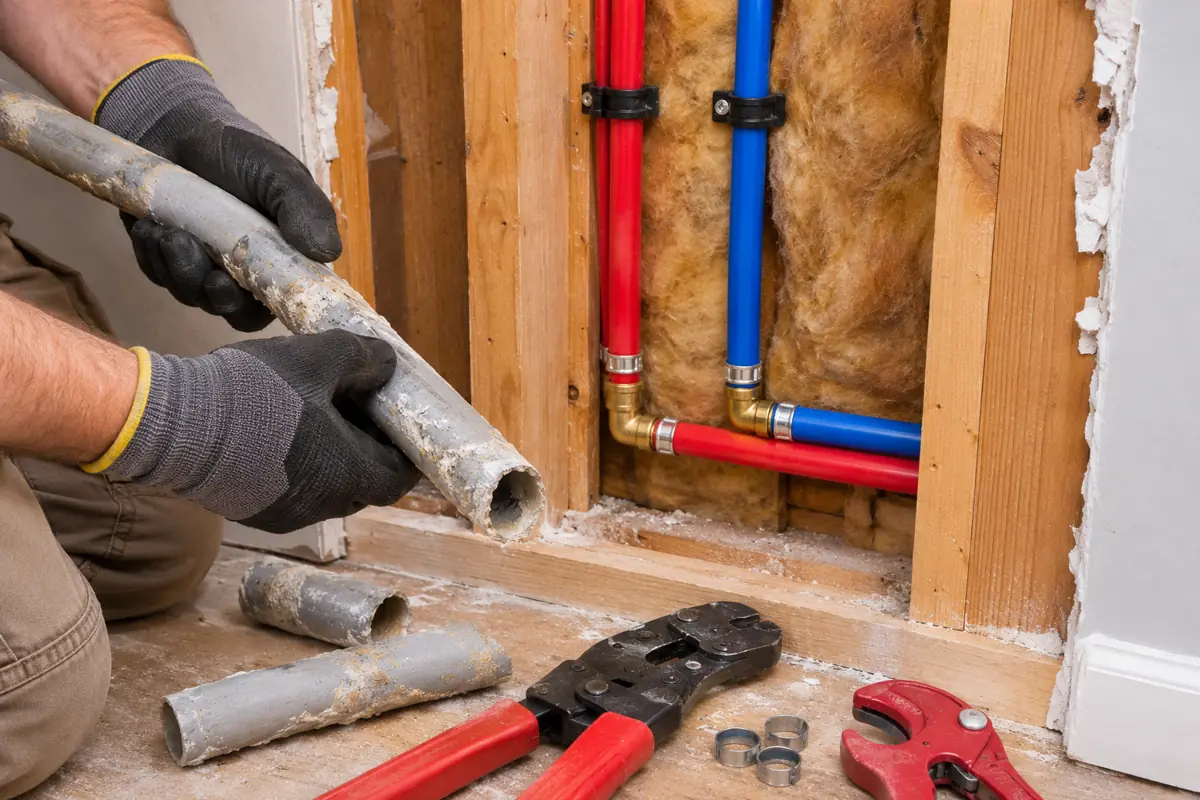
Gray Plastic Pipes? Let Us Take a Look
Polybutylene can work for years without a problem, then fail at a fitting with little warning. Many owners do not know they have it until an inspector points it out.
A quick look settles the question. If it is Poly B, you can plan the replacement on your own timeline instead of after a leak.
Book Polybutylene Pipe Replacement in Hanford CA Today
Looking for polybutylene pipe replacement near me? Call or send the short form. Our polybutylene pipe replacement company will confirm your pipe type and share a clear polybutylene pipe replacement price.
Polybutylene Pipe Questions and Answers
Poly B raises plenty of questions. Here are clear answers.
How do I know if I have polybutylene pipes?
Polybutylene is usually gray, sometimes blue or black, often stamped PB2110. It may connect with gray plastic or copper crimp fittings. Look near the water heater and under sinks.
Why is polybutylene pipe a problem?
Poly B can weaken and crack, especially at fittings, often without warning. That risk is why many insurers and buyers ask about it.
Will insurance cover polybutylene replacement?
Usually not. Some insurers may limit coverage for homes with Poly B, so replacing it can help. Check with your carrier about your policy.
What replaces polybutylene pipe?
PEX is the most common choice because it can follow similar paths, but copper is also an option. Owners who replace polybutylene plumbing can compare both in one quote.
How much does polybutylene pipe replacement cost?
Polybutylene pipe replacement cost depends on home size, fixture count and access. A written quote follows a look at your lines.
Do you replace Poly B outside Hanford?
Yes. Polybutylene pipe replacement in Kings County covers nearby towns too. A polybutylene pipe replacement contractor from our team can confirm timing once you share your address.
What does the PB2110 stamp on my pipe mean?
PB2110 pipe markings are a common sign of polybutylene. If you find that stamp on gray or blue plastic near the heater or under a sink, the line is very likely Poly B and worth replacing.