Who Needs Drywall Repair After a Repipe
Patching matters to every repipe customer, but some homes need extra care.
Homes With Textured Walls
Orange peel and knockdown finishes show patches easily if they are not matched. Careful texture match after plumbing work makes each repair disappear into the wall.
Owners Getting Ready to Sell
Visible patches can distract buyers during a showing. Clean, smooth walls after a repipe help the home look cared for and keep attention on its strongest features.
Families Who Want One Crew
Some owners do not want to hire a separate drywall contractor after the plumbers leave. Repipe wall repair handled by the same team keeps the job simple from start to finish.
Paint Ready Patches or Full Texture and Paint
There are two common levels of finish after a repipe. Here is how they compare.
| Feature | Paint Ready Patching | Full Texture and Paint |
|---|---|---|
| What is done | Patch, tape, mud and sand | Patch plus texture and paint |
| Wall look | Smooth, ready for your paint | Finished and blended |
| Your part | Paint the patch yourself | Nothing left to do |
| Good fit for | Owners who like to paint | Owners who want it done |
| Time | Shorter | A little longer |
Matching Wall Textures in Local Homes
Many homes here share a few common finishes. Here is how each one is handled.
- Orange peel texture: A light, bumpy finish common in many tract homes. It is sprayed on in thin coats, then blended at the edges so the patch fades into the surrounding wall.
- Knockdown texture: Thicker splatters flattened with a knife. It takes a careful hand to match the pattern so the patched area does not stand out once paint goes on.
- Smooth walls: Older homes and some remodeled rooms have smooth finishes. Smooth walls need extra sanding and a careful prime to keep the patch invisible under light.
How Few Holes a Planned Repipe Needs
Good planning keeps the number of openings small. Here is how that happens.
The right planning steps include:
- Mapping every fixture before work starts
- Running lines through the attic where possible
- Dropping lines inside walls near fixtures
- Using closets and cabinet backs for access
- Keeping openings small and square
- Avoiding tile and finished trim where possible
- Planning patches before any wall is opened
Patching Planned Into Your Repipe Quote
Every repipe quote spells out how patching will be handled, so nothing is left unclear after the plumbing is done.
What the Quote Covers
- How many openings are expected
- Where those openings will be
- Drywall patch and tape work
- Joint compound and sanding
- Texture matching if chosen
- Paint after repipe if chosen
- Cleanup of dust and debris
Smooth Walls With No Visible Patch Lines
The goal is walls that look the way they did before. These steps make it happen.
- Square cuts and solid backing: Openings are cut square and backed with wood strips where needed. That gives each patch a firm base, so it does not crack or sink later.
- Tape, mud and sand: Joint compound goes on in thin coats with drying time between each. Careful sanding feathers the edges so the patch sits flush with the wall.
- Prime, texture and finish: A primer seals the patch, then texture is matched to the wall around it. If paint is part of the plan, it is blended to match the room.
Recent Wall Patches After Repipes
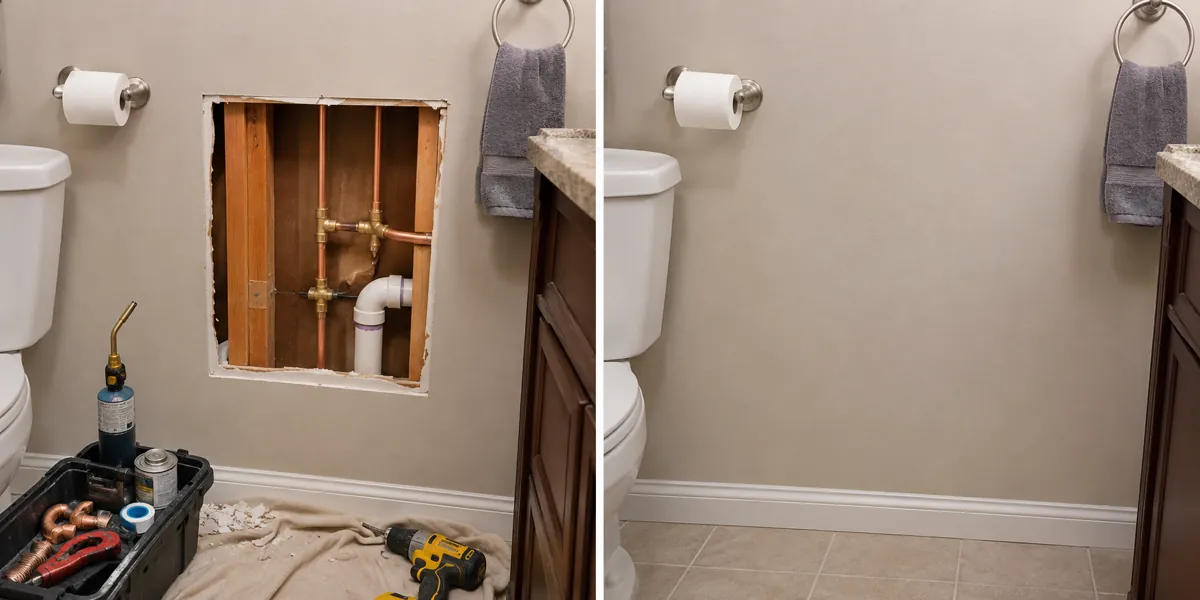
Recent drywall repair after repiping in Hanford includes orange peel walls in 1990s homes and smooth walls in older houses near downtown. Owners often say they cannot find where the openings were, even in rooms with strong afternoon light that shows every flaw.
Ask How Few Wall Openings You Need
Holes in walls are the biggest worry for many people thinking about a repipe. It is a fair concern, and it is often smaller than people expect once the plan is clear.
A walkthrough shows where lines would run and where openings would go. You see the plan before any work begins and know exactly how the walls will be restored. Most people feel a lot better once they see how small and few the openings really are.
Get Started With Drywall Repair After Repipe in Hanford
Searching for drywall repair after repiping near me? Call or send the short form. Our drywall repair after repiping company will plan the patches and send a clear drywall repair after repiping estimate.
Drywall Repair Questions After Repiping
Patching raises its own questions. Here are the common ones.
Is drywall repair included in the repipe price?
Patching is planned into every repipe quote, and the level of finish is spelled out so you know exactly what to expect. Drywall repair after repiping cost depends on the number of openings and the finish chosen.
How big are the holes for a repipe?
Usually small openings near fixtures and where lines drop from the attic. Your quote estimates the number and location before work begins.
How long does patching take?
Patching often takes one to two days because each coat needs time to dry. Texture and paint add a little more time.
Can you match popcorn or orange peel texture?
Most common textures, including orange peel and knockdown, can be matched closely. The patch is blended before paint goes on.
Do you patch walls after repipes outside Hanford?
Yes. Drywall repair after repiping in Kings County covers nearby towns too. A drywall repair after repiping contractor from our team can confirm timing, and the drywall repair after repiping price is listed in your quote.
Can I paint the patches myself?
Yes. A drywall patch after repipe can be left smooth and ready for paint, which works well for owners who want to choose and apply the paint themselves.