Who Should Pick Copper for a Repipe
Copper is not the only option, but for some homes it is the natural fit. These owners tend to choose it.
- Owners who prefer the feel and history of metal pipe
- Homes where much of the plumbing is already copper
- Houses with water heaters in tight, warm spaces
- Owners who plan to keep the home for many years
- Homes where exposed lines should look neat and rigid
- Buyers who want a copper plumbing replacement to show at resale
Soldered Copper or Press Fit Copper
Copper can be joined two ways, and each method has real strengths. This sweat copper vs ProPress comparison shows the difference.
| Feature | Soldered Copper | Press Fit Copper |
|---|---|---|
| How joints are made | Heat and solder seal each joint | A press tool crimps a sealed fitting |
| Open flame | Yes | No |
| Speed | Slower per joint | Faster per joint |
| Fitting cost | Lower | Higher |
| Track record | Generations of use | Newer, widely used today |
Copper in Older East Hanford and Downtown Homes
Older parts of town have their own plumbing history. Here is why copper often makes sense there.
Matching Past Copper Repairs
Many older homes had leaks fixed with copper over the years, leaving a patchwork of metals. Replacing everything with copper creates one uniform system and removes weak points where galvanized steel meets copper.
Dielectric Unions at the Heater
Where copper meets a steel water heater tank, a dielectric union keeps the two metals from corroding each other. Small details like this matter in homes with hard groundwater and decades of mineral exposure.
Type L for Thicker Walls
Some older homes have thin Type M copper that has started to pinhole. A Type L copper repipe uses thicker walls, which gives the new lines extra margin against wear from local water conditions.
Copper Strengths That Owners Still Choose
Copper has served homes for generations, and many owners still prefer it. Here is why it continues to earn its place.
These strengths come up again and again:
- A long, proven track record in homes
- Strong heat tolerance near water heaters
- Rigid runs that stay straight and neat
- Metal pipe that is fully recyclable
- Pests cannot chew through it
- A familiar feel that many buyers trust
- Easy to inspect where lines are exposed
Copper Quotes Shown Next to PEX Quotes
Copper costs more than PEX, and it takes a little longer to install. Seeing both prices side by side makes the choice easier, so every copper quote can be shown next to a PEX version of the same job.
How the Two Quotes Compare
- Material cost for each pipe type
- Number of joints and fittings needed
- Labor time for the full install
- Wall and attic access points
- Permit and inspection details
- Patching and cleanup plans
- Timeline for each option
The copper vs PEX cost gap depends on your home size and layout, and your copper repiping price is listed line by line.
Neat, Strapped Copper Runs You Can See
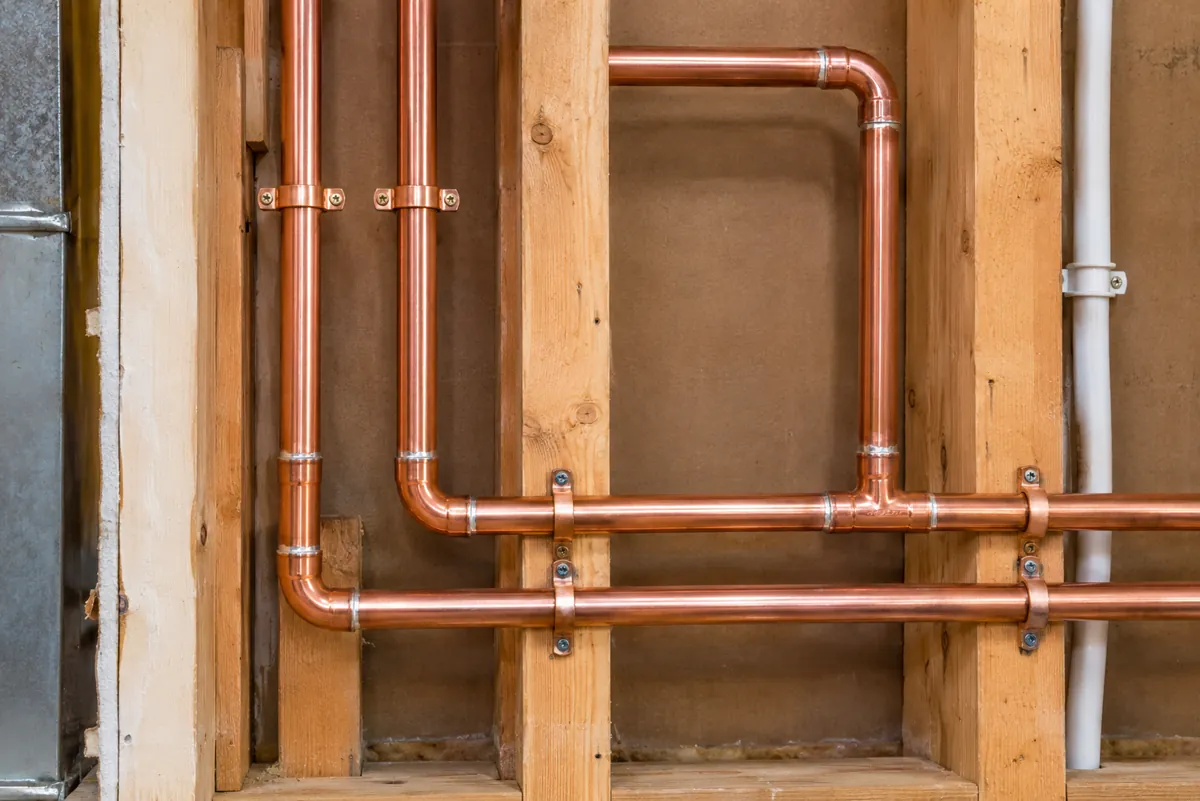
Good copper work looks as good as it performs. These details are part of every install.
- Straight runs and clean joints: Lines are cut square, cleaned and joined with sweat soldering or press fittings. Joints are wiped clean, so exposed pipe in garages and under sinks looks tidy.
- Pipe straps at the right spacing: Copper is strapped to the framing at proper intervals. That stops lines from rattling, reduces noise and keeps the weight of the pipe off the fittings.
- Pressure test before closing up: Every line is pressure tested once it is installed. Only after the system holds are walls patched, so problems are caught early instead of behind finished drywall.
Recent Copper Repipes Around Kings County
Recent copper pipe installation house jobs replaced patched mixes of galvanized and copper in older homes near downtown. Some copper repiping in Kings County also replaced thin Type M lines that had started to leak, including copper repiping in 93230 homes close to the city center.
Want Copper? Talk It Through With Us First
Copper is a big choice. It costs more than PEX, but many owners feel it is worth it for the long track record and metal feel. Others decide PEX fits their budget and goals better once they see both side by side.
There is no wrong answer here, and a good copper repiping contractor will explain both sides honestly. A short conversation about your home, your water and your plans helps you land on the material that feels right.
Book Copper Repiping in Hanford CA Today
Need copper repiping near me? Call or send the short form. Our copper repiping company will look at your home and prepare a copper repiping estimate alongside a PEX option.
Copper Repiping Questions From Local Owners
Copper raises its own set of questions, especially when compared with PEX. These are the ones owners ask most.
Is copper better than PEX for a repipe?
Neither is better for every home. Copper has a long record and handles heat well. PEX costs less and resists scale. Your water, budget and layout decide which fits.
How long does copper pipe last?
Copper often lasts many decades, though water chemistry affects it. Very hard or aggressive water can shorten its life, so a water test can help guide the choice.
Why does copper cost more than PEX?
The material costs more, and each joint is soldered or pressed, which takes more labor. Copper repiping cost depends on home size, the number of joints and how easy the lines are to reach.
Do you use Type L or Type M copper?
Thicker Type L copper is the usual choice for repipes. It has heavier walls than Type M and gives extra margin against wear from local water.
How long does a copper repipe take?
Copper usually takes a bit longer than PEX. Many single story homes take two to three days, plus patching and inspection. Your quote includes a timeline.
Can copper connect to my water heater safely?
Yes. A dielectric union joins copper to the steel tank and keeps the two metals from corroding each other where they meet.