Leaks, Rust and Weak Water Pressure at Home
A drip under the sink gets fixed, then a wet spot shows up in the hallway ceiling a few months later. Brown water runs first thing in the morning, and the shower barely sprays when someone starts the dishwasher. When every pipe in the house is the same age, the problems tend to travel from room to room.
Patching one spot at a time only buys a little time. A whole home repipe in Hanford replaces all hot and cold lines at once, so the leaks stop moving around. We plan the job around your household, explain every step and leave you with one clean, tested system.
Whole House Repipe Services for Every Home
PEX Repiping
Flexible PEX tubing is the most popular way to repipe a home here. It resists scale from hard water, bends around framing with fewer joints and goes in quickly. For many families it is the most budget friendly route to brand new water lines.
Copper Repiping
Some owners want metal pipe, and copper has served homes for generations. Rigid copper runs look neat, handle heat near the water heater and hold their shape for decades. We price copper next to PEX so you can compare before deciding.
Partial Repiping
When only one area is failing, a partial repipe can make sense. A bathroom, a kitchen and laundry group or a single bad run gets new lines, and the work ties into the rest of the system. It costs less now and leaves room to finish later.
Mobile Home Repiping
Manufactured homes often still carry gray polybutylene under the floor. We work from below through the belly, so walls are rarely opened. New PEX lines, fresh shut offs and proper insulation give the home a reliable water system again.
Rental Property Repiping
Landlords need repairs that keep tenants comfortable and units livable. We schedule around the people living there, keep the owner informed and send photos of the finished work. Single family rentals and small multi unit buildings both fit this service.
Drywall Repair After Repiping
New pipe means a few small openings in walls and ceilings. Once the lines pass inspection, each opening is patched and smoothed so it is ready for paint. You end up with working water and walls that look the way they did before.
Recent Whole House Repipes Around Hanford
Recent jobs have taken us from older homes near Downtown Hanford to newer slab houses on the north side of town. Most started with rusty water or a second leak, and each ended with a fully tested system. Full house repipe jobs across Kings County also take us to Lemoore, Armona, Home Garden and Laton.
How Your Two Day Repipe Works
A single story house repipe follows the same simple path every time. The work is split so your family can live at home while each part gets done.
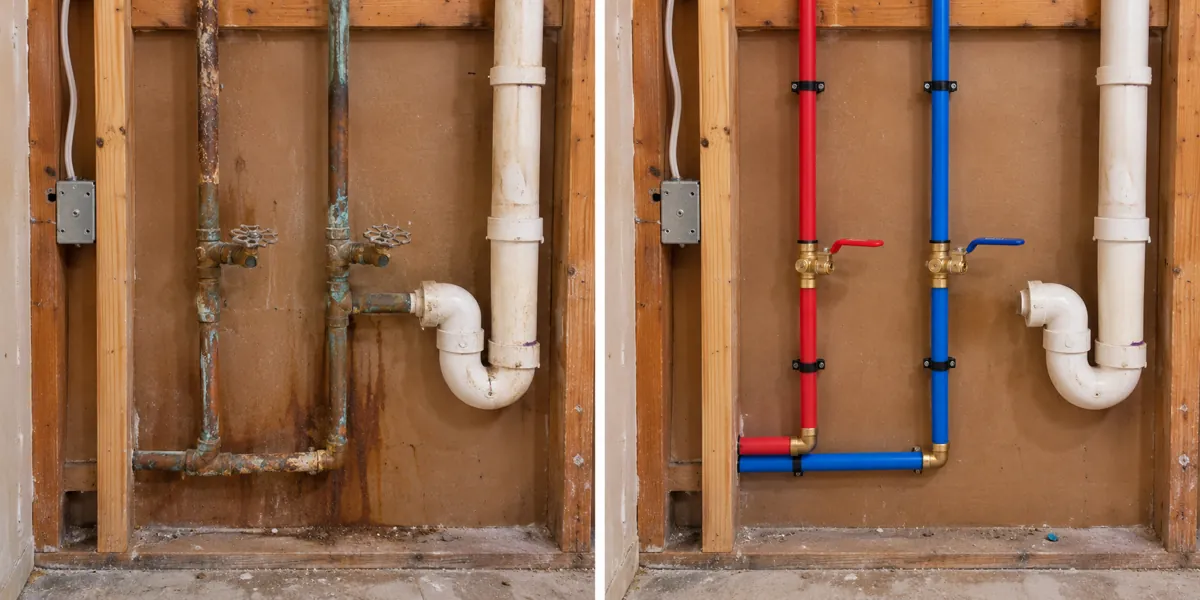
- Walkthrough and plan: A technician maps every fixture, checks the water heater and looks at attic access. This is also when the main shut off valve gets checked, since a new one is often worth adding to the job.
- Written quote and permit: You receive a written quote that lists material, scope and what is included. Once you approve it, the repipe permit in Hanford is filed with the city so the work is on record from the start.
- Protection and access: Floors, furniture and doorways are covered before anything is opened. Small wall access holes are cut only where lines need to connect, usually behind fixtures or inside closets where they are easy to patch.
- New lines through the attic: In most slab homes the new hot and cold lines run through the attic and drop down inside the walls. This attic run avoids breaking concrete and keeps the new pipe easy to reach later.
- Connections and pressure test: Every fixture gets new stub outs and angle stops, joined with crimp or expansion fittings. The whole system is then pressure tested to confirm every joint holds before the walls are closed.
- Inspection, patch and cleanup: A city inspector reviews the work, then each opening is patched and the house is cleaned. Before the crew leaves, you get a walkthrough of the new system and where to find the shut off.
Why Your Home May Need a Full Repipe
Some homes can get by with a repair. Others reach a point where it makes more sense to repipe the entire house. These signs usually point that way.
Every Pipe Is the Same Age
When all the supply lines went in together, they wear out together. One leak is often the first of several. If you replace all water lines in house at once, you stop chasing problems one wall at a time.
Leaks Keep Showing Up in New Places
A patched kitchen line followed by a ceiling stain and then a slab leak is a clear pattern. Old pipe is thinning throughout. A whole house plumbing replacement ends that cycle and protects floors, cabinets and drywall from more water damage.
Rusty Water or Falling Pressure
Galvanized pipe rusts from the inside and narrows over time. Brown water and weak showers usually mean the inside of the pipe is heavily scaled. New lines restore full flow and clear water at every tap in the house.
Insurance or a Home Sale
Some insurers ask about galvanized or polybutylene pipe, and buyers notice it during inspections. A permitted repipe with paperwork answers those questions and removes a common reason for a sale to stall.
What Homeowners Say After a Full Repipe
Picking a repipe contractor in Hanford is a big decision, and families tell us the biggest change afterward is peace of mind. No more buckets, no more brown water and no more guessing where the next leak will be. Their stories say more than we can.
PEX and Copper Choices for Your Repipe
One of the first choices is whether to repipe the house with PEX or copper. Both work well in local homes, and the right pick depends on your budget, your layout and how you feel about plastic versus metal pipe.
Choosing PEX for Your Repipe
- Built for hard water: PEX does not rust or corrode, and mineral scale has a hard time sticking to its smooth walls. That makes it a strong match for the hard groundwater most local homes rely on every day.
- Easy on budget and schedule: Flexible tubing needs fewer fittings and goes in faster than rigid pipe. Some homes use a manifold that feeds each fixture its own line, which makes future shut offs simple.
Choosing Copper for Your Repipe
- Proven metal pipe: Copper has a long service history and a solid feel that many owners trust. Thicker Type L copper is a common pick for repipes and gives extra wall strength against wear.
- Comfortable with heat: Copper handles high temperatures near the water heater and in hot attics without sagging. Once strapped to the framing, the runs stay straight and tidy for years.
Older Hanford Homes and Their Original Pipes
Old house repiping starts with knowing when a home was built. Pipe age here follows the age of each neighborhood, which gives a strong clue about what sits inside the walls.
Homes From the 1930s and 1940s
Streets near the historic core hold many of the oldest houses in town. Downtown Hanford homes from the 1930s and 1940s often still run original galvanized lines. After decades of mineral buildup, many of those pipes carry only a fraction of their original flow.
Mid Century Ranch Houses
Homes from the 1950s and 1960s often mix galvanized lines with later copper repairs. That patchwork creates weak points where different metals meet. A full repipe replaces the mix with one matching system from end to end.
1980s Tracts on Slab Foundations
Much of the city was built in the 1980s, and many of those homes sit on slab foundations. Copper under the slab can wear thin, and some homes from that era used polybutylene. Overhead lines through the attic solve both problems at once.
Whole House Repipe Pricing by Home Size
Your whole house repipe price depends on home size, fixture count, material and access. The cost to repipe a 3 bedroom house differs from a small cottage, and this table shows how scope grows with the home.
| Home Size | Typical Scope | What Affects the Price |
|---|---|---|
| 1 bath home | Kitchen, bath, laundry and outdoor hose lines | Material choice and attic access |
| 2 bath home | Adds a second bath and more fixture connections | Fixture count and wall finishes |
| 3 bath home | Larger layout with longer runs | Run length and number of drops |
| Two story home | Lines between floors plus attic runs | Access between levels |
Not Sure You Need a Full Repipe Yet
One leak does not automatically mean every pipe is failing. Sometimes a single bad section or a worn valve is the real problem. Other times, the pipe type and its age tell a different story.
A careful look at your lines clears that up. You learn what kind of pipe you have, how worn it is and whether a repair or a repipe suits your home.
Book Whole House Repiping in Hanford CA
Call us or send the short form to schedule a walkthrough. You will get honest answers, a written quote and a clear plan for new water lines in your home.
Whole House Repiping Questions and Answers
Planning a full repipe raises a lot of questions. Here are the ones homeowners ask most often before the work begins.
How many days does a full repipe take in Hanford?
Many single story homes are repiped in about two days, and some small homes can even be close to a one day repipe. Patching and the city inspection can add a little time. Your quote includes a timeline.
Will I have water during the repipe?
Water is off while crews are working on the lines. The job is planned so water can be restored in the evening whenever the day's work allows, so most families can cook and shower at night.
Do you run the new pipes through the attic?
In most slab homes, yes. Lines run through the attic and drop down inside the walls. A repipe house with attic lines setup avoids breaking concrete and keeps the new pipe easy to reach later.
How many holes do you cut in the walls?
Only small openings where lines connect, usually near fixtures. The exact number depends on your layout. Every repipe and drywall repair plan is explained before work starts, so there are no surprises.
Is a whole house repipe worth it?
If you have galvanized or polybutylene pipe, or more than one leak in a few years, it often is. One repipe usually costs less than a string of repairs plus the water damage that comes with them.
What is replaced in a whole house repipe?
All hot and cold lines, stub outs and angle stops are replaced, and often the main shut off valve as well. Drain and sewer lines are a different system and are not part of a repipe.
Do you replace the line from the meter to the house?
That buried main line is a separate job. It can be quoted alongside your repipe so both are done in one visit. Ask about it during your walkthrough if your yard line is old or leaking.