Old Pipes Causing Rust, Leaks or Low Flow
Old pipe rarely fails all at once. First the water turns a little orange in the morning. Then the kitchen faucet slows to a trickle, or a tiny pinhole leak stains the drywall behind the fridge. Each pipe material breaks down differently, which is why quick fixes often miss the real cause.
Our approach starts with identifying exactly what is in your home. Once the pipe type and its condition are clear, we replace the failing lines with PEX or copper, test every joint and leave you with water you can trust again.
Pipe Replacement Services by Pipe Type
Galvanized Pipe Replacement
Zinc coated steel was common in homes built before the 1970s. It rusts from the inside, narrows with scale and leaks at threaded joints. When you replace galvanized pipes, rust colored water clears up and pressure returns to every faucet in the house.
Polybutylene Pipe Replacement
Gray plastic Poly B lines went into many homes from the late 1970s into the mid 1990s. They can crack at the fittings with little warning. Owners who replace polybutylene pipes remove a known risk that many insurers and buyers ask about.
Copper Pinhole Leak Replacement
Thin copper Type M can develop tiny pinhole leaks as it ages, especially with mineral rich water. One pinhole can be patched. When they keep coming back, it is time to replace corroded copper pipes before the next leak soaks a wall.
CPVC Pipe Replacement
Cream or tan CPVC can turn brittle with age and attic heat. It often cracks when someone simply bumps it during a repair. A brittle CPVC replacement with flexible PEX gives you lines that bend instead of snapping.
Old Pipes We Recently Replaced Near Hanford
Recent jobs include rusted galvanized lines pulled from older homes near Downtown Hanford, cracked Poly B fittings from 1980s tracts and pinholed copper from homes across town. Old pipe replacement in Kings County keeps us busy in Lemoore, Laton and Kingsburg too.
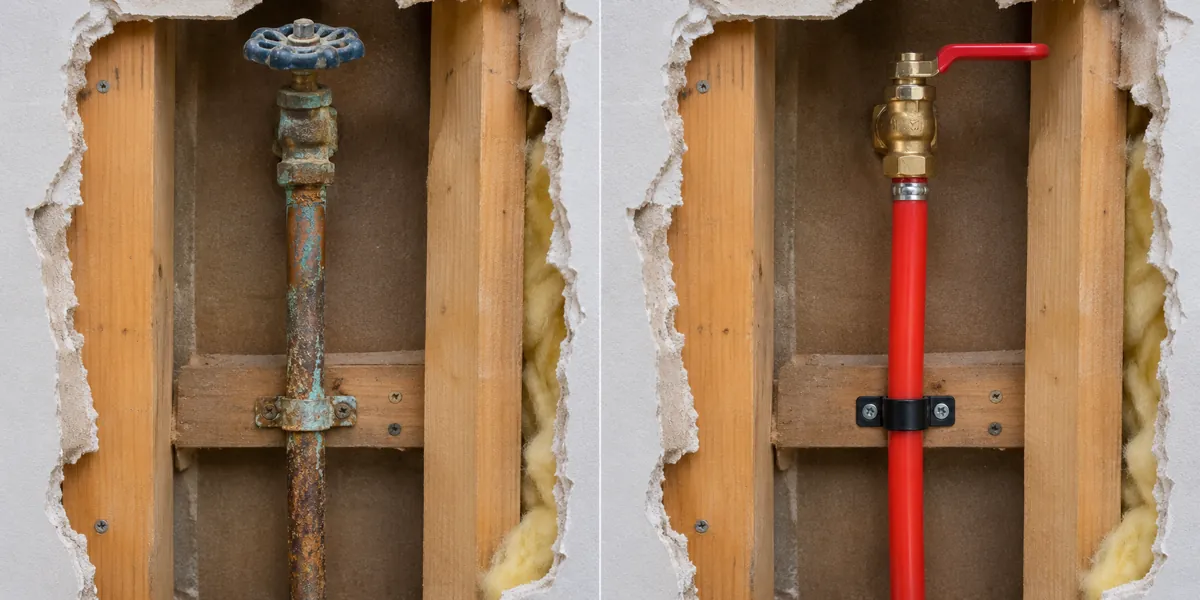
How We Replace Old Pipes Step by Step
Every replacement follows a clear order, from identifying the pipe to the final cleanup. Here is what the job looks like from start to finish.
- Pipe identification: The first visit pins down what you have. A quick magnet test separates galvanized steel from copper, and markings on plastic lines reveal Poly B or CPVC. Where walls hide the answer, a video inspection can help.
- Condition check: Water pressure, visible corrosion and past repairs show how worn the system is. That tells us whether a section repair is enough or whether most of the lines should be replaced together.
- Written estimate: You receive a pipe replacement estimate for Hanford that lists the material, the scope and what is included. There is room for questions before you decide anything at all.
- Permit and prep: The plumbing permit is filed, floors are covered and small access openings are made where the new lines need to connect. Work areas stay tidy so daily life can continue.
- New lines installed: Failing pipe is replaced with PEX or copper, and each fixture gets fresh connections. Pipe that is buried inside closed walls is usually cut off and safely abandoned in place.
- Testing and cleanup: The new lines are pressure tested, then inspected by the city. Openings are patched, old pipe is hauled away and you get a walkthrough of the finished work.
Why Old Pipe Types Fail Over Time
Every pipe has a working life, and water chemistry can shorten it. Here is how each common material wears down in local homes.
- Galvanized steel rusts inward: The zinc coating wears away after decades, and rust starts eating the steel from the inside. Scale builds up at the same time, which narrows the pipe and explains why rusty pipe replacement often restores strong pressure.
- Polybutylene weakens at the fittings: Poly B can become brittle and develop cracks, especially where fittings join the lines. Failures often come without warning, so leaking pipes replacement is a common call in homes from that era.
- Thin copper wears through: Mineral rich water, high water speed and age all wear down copper walls. The result is tiny pinhole leaks, often inside walls or under floors where they go unnoticed for a while.
- Older CPVC turns brittle: Heat cycling and age make some CPVC hard and fragile. A system can look fine until a repair or a bump causes a crack that spreads along the line.
Owners Share Their Pipe Replacement Results
The most common thing owners mention after new pipe goes in is how clear the water looks and how strong the shower feels. Many say they wish they had done it sooner.
Find Out Which Pipes Your House Has
Not sure how to identify pipe type in my house? Start where pipe is exposed, such as near the water heater, under sinks or at an outdoor hose bib. This quick guide covers what to look for.
| Pipe Type | How It Looks | Era Common in Hanford | Typical Problem |
|---|---|---|---|
| Galvanized steel | Dull gray metal, threaded joints, a magnet sticks | Before the 1970s | Rust, scale, low pressure |
| Polybutylene | Gray or blue plastic, often stamped PB2110 | Late 1970s to mid 1990s | Cracks at fittings |
| Copper Type M | Reddish brown metal, thin wall, red markings | 1960s onward | Pinhole leaks |
| CPVC | Cream or tan rigid plastic, glued joints | 1980s onward | Brittle cracking |
If what you see does not match the table, a quick visit clears it up. Some homes have two or three pipe types after years of repairs.
Common Pipe Ages Across Hanford Neighborhoods
Housing in this city spans almost a century, and pipe types follow the building years. A few patterns stand out.
- The historic core: Streets like 10th St and 11th St hold homes with median build years in the 1930s and 1940s. Many still have galvanized lines, and some have been patched with copper over the years.
- Mid century ranch homes: Areas along 10th Ave and 11th Ave have many homes from around 1960. These often mix galvanized with later copper, and the joints between them tend to corrode.
- 1980s and 1990s tracts: Much of the city was built in these decades, which is when polybutylene and thin copper were common. These homes are now old enough that you may need to replace water lines older home owners once thought were new.
Old Pipe Replacement Costs and Financing Options
The cost of water pipe replacement in Hanford depends on how much pipe needs to go and where it runs. A single section near the water heater is a small job. Replacing every line in a two bath home is a bigger one.
- Section replacement: Suits homes where damage is limited to one area and the rest of the pipe is in good shape. It costs less now but may lead to more repairs later.
- Room or wing replacement: Covers one bathroom, the kitchen or one side of the house. A middle ground for homes with mixed pipe ages.
- Whole house replacement: Replaces all supply lines at once. It costs more up front and usually saves money compared with years of repeat repairs.
A written quote follows a look at your pipes. If spreading the cost matters to you, mention it during the visit so payment timing can be part of the conversation.
Unsure About Your Pipes? Ask for a Check
Many homeowners only learn about their pipes when something goes wrong, like a failed home inspection or a sudden leak. Others notice small changes in water color or pressure and wonder if it matters.
A quick look answers that question. You learn what pipe you have, how worn it is and whether it needs attention now or can wait a while longer.
Book Pipe Replacement in Hanford CA
Call or send the short form to schedule a visit. A pipe replacement plumber in Hanford from our team will check your lines and give you a clear written quote.
Pipe Replacement Questions From Local Owners
Old pipes raise a lot of questions, especially when you are not sure what is behind your walls. These are the ones we hear most.
How do I know what pipes my Hanford house has?
Look at exposed pipe near the water heater or under sinks. Gray metal that a magnet sticks to is galvanized, gray or blue plastic is often polybutylene and reddish brown metal is copper. A visit confirms it.
Should I replace galvanized pipes right away?
If you see rust colored water, low pressure or leaks, plan the replacement soon. Galvanized lines corrode from the inside, and local hard water adds scale that narrows them even further.
Is polybutylene pipe a problem?
Yes. Poly B went into many homes from about 1978 to 1995 and is known for failing at fittings. Some insurers ask about it, and when insurance requires pipe replacement, PEX or copper is the usual fix.
Can you replace only the bad section of pipe?
Sometimes. A single damaged run can be replaced if the rest of the system is sound. If most pipes are the same age and material, more leaks are likely, so both options are explained.
What do you replace old pipes with?
PEX or copper, whichever fits your home and budget. For many owners, a pipe material upgrade to PEX is the practical choice because it resists scale, installs quickly and costs less than copper.
How much does pipe replacement cost in Hanford?
It depends on how much pipe is replaced, how easy it is to reach and the material you choose. A written quote follows a look at your home, so you know the cost before any work starts.
What if my home inspection flagged the pipes?
A home inspection failed pipes note usually points to galvanized or polybutylene lines. A closer look shows how serious the issue is and what a fix would involve, which helps buyers and sellers plan the next step.