When Rusty Water Means a Pipe Problem
Not all brown water points to bad pipes. These signs suggest the problem is inside your home.
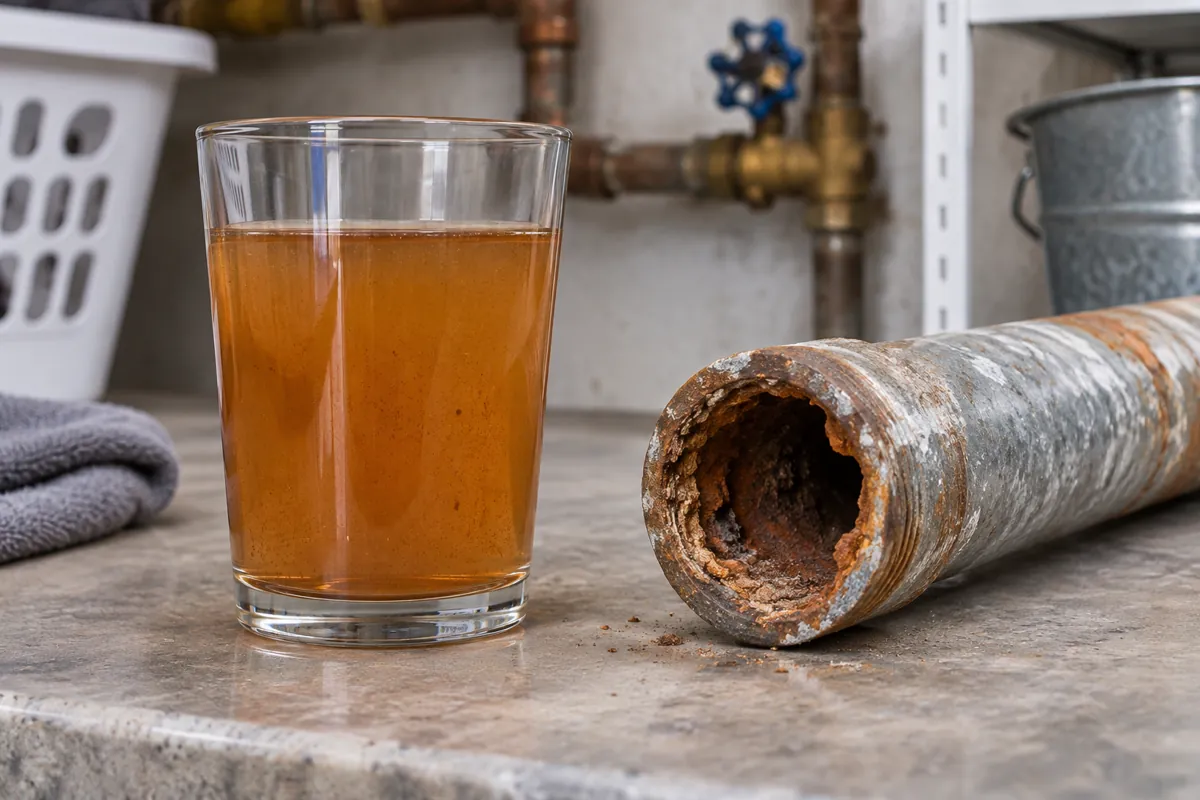
- It happens every morning: Brown water from tap after the pipes sit overnight usually means rust is building inside old lines. Once the water runs a while, it clears, then the cycle repeats the next day.
- Only your home is affected: If neighbors have clear water, city main work is unlikely. Rusty water in house lines and fixtures points to galvanized pipe or the heater.
- Stains keep coming back: Orange rings in toilets and tubs return soon after cleaning. That steady rust supply often comes from corroded pipe walls.
- Pressure is dropping too: Rust and scale often show up together. Weak flow alongside brown water is a strong sign the inside of the pipe is clogged.
Rusty Hot Water or Rusty Cold Water
Which side runs brown tells you a lot about where the rust is coming from.
| What You See | Likely Source | Next Step |
|---|---|---|
| Rusty hot water only | Water heater tank or anode rod | Check or replace the heater |
| Rusty cold water only | Galvanized supply lines | Pipe check and replacement |
| Both hot and cold | Old pipes throughout the home | Full pipe check |
| Brown for a short time, then clear | Possible city main work | Ask neighbors, wait and recheck |
| Brown at one faucet only | That branch or fixture | Local repair or branch repipe |
City Water, Old Lines and Brown Water
Local water comes from groundwater, and several things can tint it brown.
City Main Flushing or Repairs
When the city flushes mains or repairs a line, sediment can stir up and briefly discolor water in nearby homes. It usually clears after running the cold tap for a few minutes.
Galvanized Corrosion Inside the Home
Older homes with galvanized lines release iron as the pipe rusts from the inside. That galvanized corrosion causes the steady, daily discolored water pipes problem many owners describe.
Minerals and Hard Water
Hard groundwater adds scale inside old pipe, and that scale traps rust particles. When flow changes, those particles break loose and show up as cloudy or brown water.
Fast Test Visit for Brown Water
A short test visit sorts out the cause quickly. Here is what it usually involves.
A typical test visit covers:
- Running hot and cold separately
- A flush test at several faucets
- A look at the water heater and anode rod
- A magnet check on exposed pipe
- A water sample where useful
- Questions about when the color appears
- Clear findings and a plan
We Find the Source Before Replacing Anything
Replacing pipe is a big step, so it only makes sense when the pipe is truly the cause. The source comes first, every time.
Why the Source Matters
- The heater can cause rusty hot water only
- City work can tint water for a short time
- A single branch can be the only rusty line
- Whole house galvanized needs a full repipe
- Each cause has a different fix
- You only pay for what solves the problem
- Rusty water pipe replacement cost stays tied to the real issue
Water Heater Checked on the Same Visit
Since the water heater is a common source of brown water, it gets a close look during every visit.
- Anode rod condition: The anode rod protects the tank from rust. Once it wears out, the steel tank starts corroding, and rusty hot water only is often the first sign.
- Tank age and condition: Older tanks with rust at the fittings or base are close to the end of their life. Catching that early avoids a flooded garage later.
- Sediment buildup: Hard water leaves sediment at the bottom of the tank. A flush can help, but heavy buildup can also mean the tank is wearing out.
Recent Rusty Water Fixes in Local Homes
Recent rusty water pipe replacement in Kings County includes galvanized branches in older homes and a few water heaters with worn out anode rods. Several owners only needed a new tank, not new pipe.
Brown Water Today? Call for a Test
Brown water is unsettling, especially when you are not sure if it is safe or where it comes from. Running the cold tap for a few minutes is a good first step.
If the color keeps coming back, a quick test points to the real cause. Then you can decide on a fix with clear information in hand.
Call Now for Rusty Water Pipe Replacement in Hanford
Searching for rusty water pipe replacement near me? Call or send the short form. Our rusty water pipe replacement company will test your water and send a clear rusty water pipe replacement estimate.
Rusty Water Questions and Answers
Brown water raises plenty of questions. Here are the common ones.
Why is my water brown in Hanford?
Brown water usually comes from rusting galvanized pipe, a corroding water heater or city main work. If it clears after a few minutes, it may be the main. If not, check your pipes.
Is rusty water safe to drink?
Rust is mostly iron, but discolored water from old pipe can carry other metals. Avoid drinking it until the cause is found and fixed.
Will replacing pipes fix rusty water?
Yes, if the rust comes from your galvanized lines. New PEX or copper does not rust, so the color clears once the old pipe is out of service.
Can the water heater cause rusty water?
Yes. A worn anode rod or corroding tank often causes rusty hot water only. Replacing the rod or the heater solves it.
How much does it cost to fix rusty water?
It depends on the cause. A heater fix costs far less than replacing pipe. Affordable rusty water pipe replacement starts with a test, and a rusty water pipe replacement contractor gives you a clear rusty water pipe replacement price.