Homes That Need a Pressure Regulator
Not every home needs a regulator. These are the ones that usually do.
- Homes with high street pressure: If a gauge reads above about 80 psi with everything off, most codes call for a pressure reducing valve. High pressure strains pipes, fittings and appliances every day.
- Homes with an old regulator: Regulators wear out, often after about 10 to 15 years. Hard water can shorten that. A worn valve may let pressure climb or drop without warning.
- Homes after a repipe: New pipe deserves protection. Adding a regulator during a repipe keeps pressure steady on fresh lines and new fixtures.
- Homes with frequent fixture failures: Leaking toilet valves, dripping faucets and failed washer hoses can all be signs of pressure that runs too high.
Replace the Regulator or Repair It
Some regulators can be rebuilt, and some should be replaced. This comparison helps.
| Feature | Regulator Replacement | Regulator Repair |
|---|---|---|
| What happens | New valve installed | Internal parts rebuilt |
| Good fit for | Old or badly worn valves | Newer valves with one bad part |
| Lifespan after | Full new valve life | Depends on the rest of the valve |
| Cost | Higher | Lower |
| Time | About an hour or two | Often about the same |
Street Pressure Varies Across Hanford
Water pressure is not the same from one street to the next.
Elevation and Distance
Homes closer to pumping stations or at lower points in the system can see higher pressure. Homes farther away may see less. A gauge reading is the only way to know your number.
Heated Water and Expansion
When a water heater warms water, it expands. In a closed system, that extra pressure has nowhere to go. An expansion tank works with the regulator to handle it.
Hard Water and Valve Wear
Mineral rich groundwater builds scale inside regulators. Over time that scale affects how well the valve holds its setting.
Banging Pipes, Running Toilets and High Pressure
High pressure and a failing regulator both leave clues. These are the common ones:
- Pipes that bang when a valve closes
- Toilets that run or refill on their own
- Faucets that drip even with new washers
- Washer and dishwasher hoses that fail early
- A relief valve on the water heater that drips
- Pressure that swings up and down
- A gauge reading above about 80 psi
Pressure Tested Before and After
Every regulator job starts and ends with a reading, so the result is clear.
What Gets Measured
- Street pressure before the regulator
- Household pressure with fixtures off
- Flow pressure with water running
- The PRV setting after install
- Pressure after the water heater cycles
- Expansion tank pressure where present
- A final reading shared with you
Pipes and Fixtures Protected From High Pressure
A working regulator protects more than the pipes.
- Longer fixture life: Faucets, toilet valves and showerheads last longer at normal pressure. That means fewer small repairs and fewer surprise drips.
- Safer appliances: Water heaters, dishwashers and washing machines are built for a certain pressure range. Keeping pressure there reduces strain on hoses and valves.
- Quieter plumbing: A high water pressure fix often ends banging pipes. Lower, steadier pressure reduces water hammer when valves close quickly.
Recent Pressure Regulator Installs Nearby
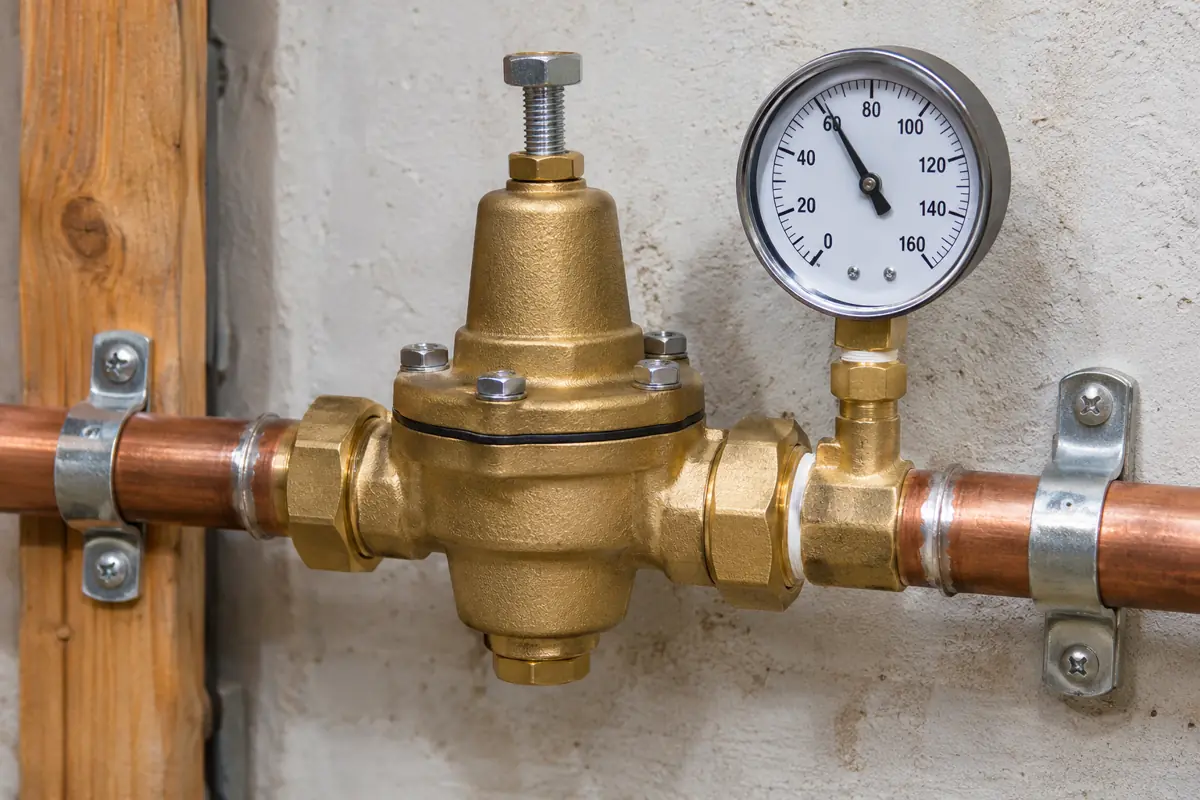
Recent pressure regulator installation in Kings County includes homes with readings well above normal and older homes with regulators that had failed. Several PRV replacement Hanford jobs were added during repipes.
Pipes Banging at Night? Get a Test
Banging pipes and running toilets are easy to ignore, but they often point to pressure that is too high. Over time, that pressure wears out fixtures and stresses every joint.
A quick gauge test tells you where your pressure stands. If it is too high, the fix is usually simple and quick, and you see the new reading right away.
Get Started With Pressure Regulator Installation in Hanford
Need pressure regulator installation near me? Call or send the short form. Our pressure regulator installation company will test your pressure and send a clear pressure regulator installation estimate.
Pressure Regulator Questions and Answers
Regulators raise a few common questions. Here are clear answers.
Do I need a water pressure regulator?
If your static pressure tests above about 80 psi, most codes call for a regulator. A quick gauge test tells you where your home stands.
How long does a pressure regulator last?
Many last about 10 to 15 years, though hard water can wear them sooner. A failing regulator often shows up as pressure that swings up and down.
How much does a PRV replacement cost in Hanford?
Pressure regulator installation cost depends on valve size, access and whether an expansion tank is needed. Affordable pressure regulator installation starts with a test, and the pressure regulator installation price is shared before work.
Can a bad PRV cause low pressure?
Yes. A failing regulator can drop pressure or let it swing. Testing shows whether the regulator or something else is the cause.
Do you install regulators outside Hanford?
Yes. A pressure regulator installation contractor from our team also covers nearby towns, including water pressure regulator install work in older homes.
What is a pressure reducing valve?
A pressure reducing valve is the device that lowers incoming street pressure to a safe level for your home. It usually sits near the main shut off where the water line enters the house.
How long does a regulator install take?
Most installs take about one to two hours, including the before and after pressure readings. Water is off for only part of that time.
Do I need an expansion tank with a regulator?
Often, yes. A regulator closes the system, so heated water has less room to expand. An expansion tank near the water heater absorbs that extra pressure and protects the relief valve.