When You Need Slab Leak Detection
A leak under the slab rarely announces itself clearly. These clues mean it is time to look closer.
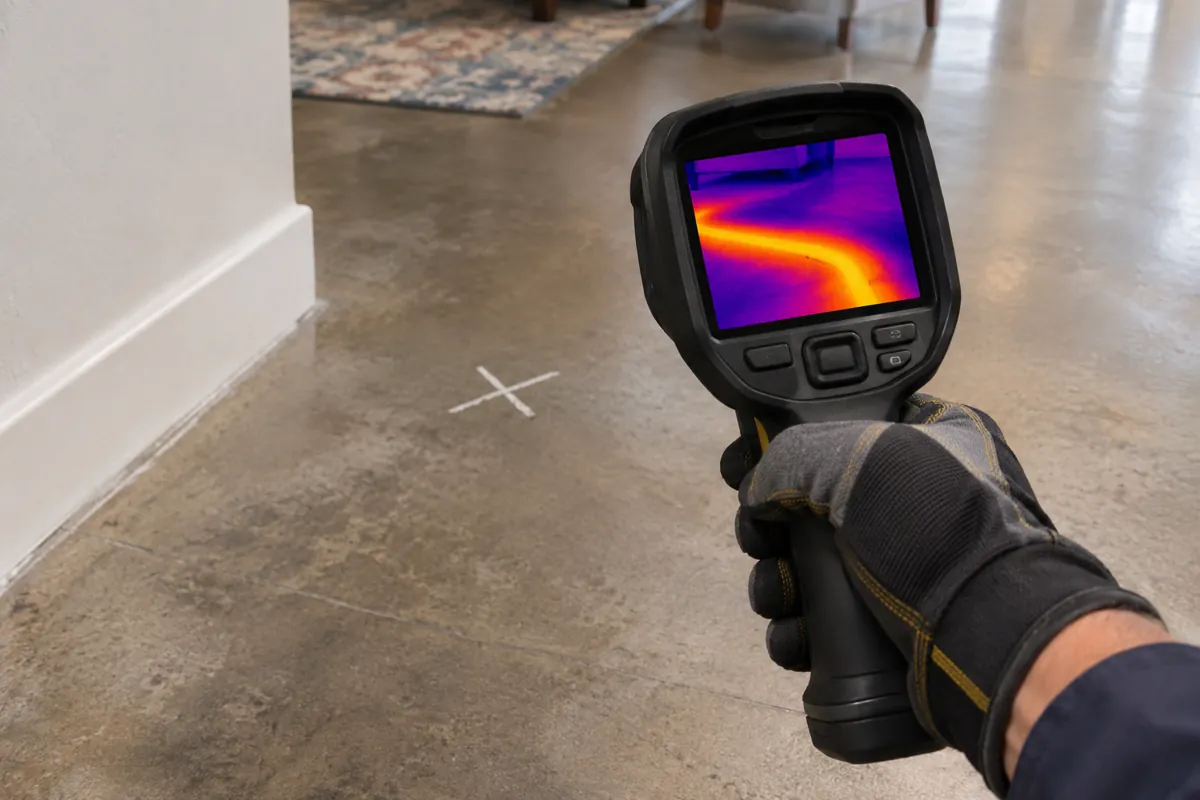
- A warm floor spot: A patch of tile or wood that feels warm under bare feet often points to a hot water line leaking below. The heat spreads through the concrete and shows up on the surface.
- The meter keeps moving: With every tap and appliance off, the water meter should sit still. If it keeps turning, water is escaping somewhere, and the slab is a common place to look.
- A sudden jump in the water bill: Nothing changed in your routine, yet the bill climbs month after month. Hidden leaks under the floor are one of the usual reasons.
- Damp carpet or a running water sound: Moisture rising through flooring or a faint hiss under the floor are strong signs it is time to find leak under slab areas before damage spreads.
Acoustic Listening or Thermal Imaging
Two main tools are used to find slab leaks. Each has its strengths, and many visits use both.
| Feature | Acoustic Detection | Thermal Imaging |
|---|---|---|
| How it works | Listens for water escaping under concrete | Shows heat patterns on the floor |
| Strongest use | Hot and cold water lines | Hot water line leaks |
| Floor types | Most flooring | Clearest on exposed surfaces |
| What you see | A marked spot on the floor | A heat map image |
| Often paired with | Line isolation tests | Acoustic confirmation |
Slab Homes Across Hanford and Leak Risk
The way many local homes are built makes slab leaks a common call.
Slab on Grade Construction
Much of the city's housing from the 1970s onward was built directly on concrete. Water lines run through or under the slab, out of sight until something goes wrong.
Hard Water and Copper Wear
Mineral rich groundwater can wear copper from the inside over many years. Under a slab, that wear shows up as a leak nobody can see.
Ground Movement
Expansive soil swells and shrinks with moisture, and the wider region has seen ground sinking from groundwater pumping. Movement like this adds stress to lines under the floor.
Detection Report for Your Insurer
Insurers often want proof before approving a claim. A detection visit gives you useful records.
A typical report includes:
- The marked location of the leak
- Which line is leaking, hot or cold
- Photos of the marked spot
- Thermal images where used
- Pressure test readings for each line
- Notes on the condition of the floor
- Recommended repair options
Leaks Found Without Breaking Your Floor
The goal of detection is to find the leak first and open the floor only if it truly needs to be opened.
How Non Destructive Detection Works
- Line isolation separates hot and cold lines
- Pressure tests show which line is losing water
- Acoustic leak detection listens through the slab
- Thermal leak detection spots warm areas
- The leak is narrowed to a small area
- The spot is marked on the floor
- Repair options are explained before any work
Fast Detection Visits Across Hanford
A slab leak should not sit for weeks. These steps keep the process moving.
- Quick scheduling: Calls about slab leaks are treated as a priority, and you get a clear visit window. Shut off tips on the phone help limit damage until the technician arrives.
- A focused visit: Most detection visits take about an hour or two. The technician works through each line, narrows down the leak and marks the spot.
- Clear next steps: Before leaving, you hear the repair options and their trade offs. A slab leak detection estimate for the repair follows, so you can decide on your own time.
Recent Slab Leaks We Located
Recent slab leak detection in Kings County includes hot water leaks under kitchen tile and cold line leaks found beneath carpeted bedrooms. Many owners were surprised how precisely the spot could be marked.
Meter Still Moving? Book a Detection Visit
A water meter that keeps turning with everything off is one of the clearest signs of a hidden leak. The longer it runs, the more water and money are lost.
A meter test for leak signs is easy to do at home, but finding the exact location takes the right tools. That is where a detection visit comes in.
Book Slab Leak Detection in Hanford CA Today
Need slab leak detection near me? Call or send the short form. Our slab leak detection company will find the leak and explain your options clearly.
Slab Leak Detection Questions and Answers
Detection raises a few common questions. Here are the answers.
How much does slab leak detection cost in Hanford?
Slab leak detection cost depends on home size and how many lines need testing. The slab leak detection price is shared before the visit, and affordable slab leak detection can save money by pointing to the right fix.
How accurate is slab leak detection?
With acoustic and thermal tools, experienced technicians usually narrow a leak to a small area, often within a few feet, before any repair begins.
How do I check for a slab leak myself?
Turn off every tap and appliance, then watch the water meter. If it still moves, you likely have a leak. A warm floor spot points to the hot water side.
How long does slab leak detection take?
Most visits take about an hour or two, depending on the home and the number of lines tested. You learn the results before the technician leaves.
Do you find slab leaks outside Hanford?
Yes. A slab leak detection contractor from our team also covers nearby towns. Call with your address to confirm the next visit window.
What happens after the leak is found?
You get the marked location, photos and a clear list of repair options, from an attic reroute to a direct slab repair. Nothing is opened until you choose a fix.